Publications
Publications
- 1
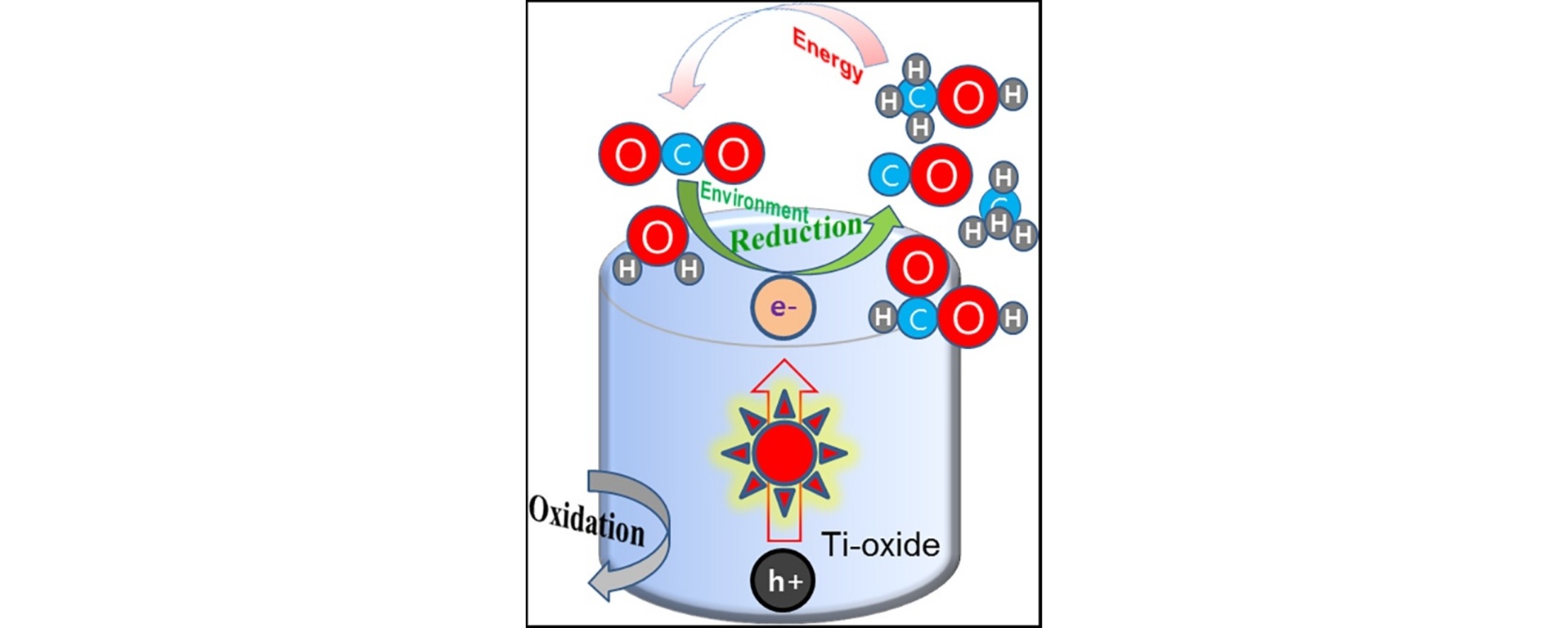
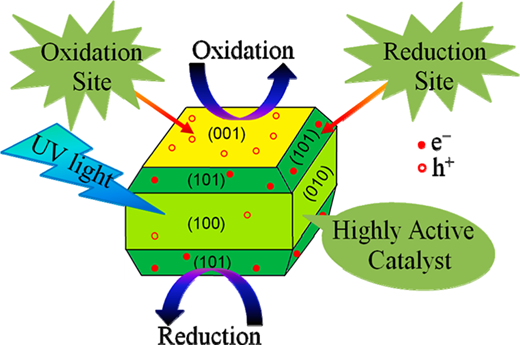
Synergy of Low-Energy {101} and High-Energy {001} TiO2 Crystal Facets for Enhanced Photocatalysis
Nitish Roy; Youngku Sohn; Debabrata Pradhan
ACS Nano 2013, 7, 2532-2540. DOI ↗ 📊 인용 ↗
📄 초록 (English) ▾
Controlled crystal growth determines the shape, size, and exposed facets of a crystal, which usually has different surface physicochemical properties. Herein we report the size and facet control synthesis of anatase TiO2 nanocrystals (NCs). The exposed facets are found to play a crucial role in the photocatalytic activity of TiO2 NCs. This is due to the known preferential flow of photogenerated carriers to the specific facets. Although, in recent years, the main focus has been on increasing the surface area of high-energy exposed facets such as {001} and {100} to improve the photocatalytic activity, here we demonstrate that the presence of both the high-energy {001} oxidative and low-energy {101} reductive facets in an optimum ratio is necessary to reduce the charge recombination and thereby enhance photocatalytic activity of TiO2 NCs.
- 2
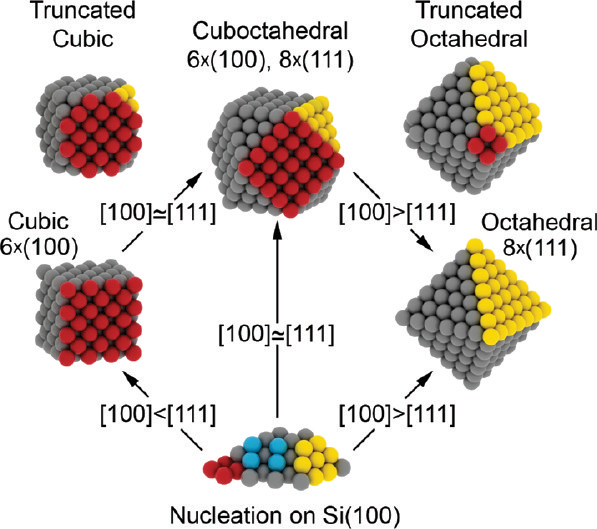
Nanoscale Shape and Size Control of Cubic, Cuboctahedral, and Octahedral Cu−Cu2O Core−Shell Nanoparticles on Si(100) by One-Step, Templateless, Capping-Agent-Free Electrodeposition
Abdullah Radi; Debabrata Pradhan; Youngku Sohn; K. T. Leung
ACS Nano 2010, 4, 1553-1560. DOI ↗ 📊 인용 ↗
📄 초록 (English) ▾
Cu-Cu2O core-shell nanoparticles (NPs) of different shapes over an extended nanosize regime of 5-400 nm have been deposited on a H-terminated Si(100) substrate by using a simple, one-step, templateless, and capping-agent-free electrochemical method. By precisely controlling the electrolyte concentration [CuSO4 x 5H2O] below their respective critical values, we can obtain cubic, cuboctahedral, and octahedral NPs of different average size and number density by varying the deposition time under a few seconds (<6 s). Combined glancing-incidence X-ray diffraction and depth-profiling X-ray photoelectron spectroscopy studies show that these NPs have a crystalline core-shell structure, with a face-centered cubic metallic Cu core and a simple cubic Cu2O shell with a CuO outerlayer. The shape control of Cu-Cu2O core-shell NPs can be understood in terms of a diffusion-limited progressive growth model under different kinetic conditions as dictated by different [CuSO4 x 5H2O] concentration regimes.
- 7
Engineered Electronic States of Transition Metal Doped TiO2 Nanocrystals for Low Overpotential Oxygen Evolution Reaction
Nitish Roy; Youngku Sohn; Kam Tong Leung; Debabrata Pradhan
J. Phys. Chem. C 2014, 118, 29499-29506. DOI ↗ 📊 인용 ↗
📄 초록 (English) ▾
Electrochemical oxygen evolution reaction (OER) involves high overpotential at the oxygen evolving electrode and thereby suffers significant energy loss in the proton exchange membrane water electrolyzer. To reduce the OER overpotential, precious ruthenium and iridium oxides are most commonly used as anode electrocatalyst. Here we report marked reduction in overpotential for the OER using transition metal (TM) doped TiO 2 nanocrystals (NCs). This reduction in overpotential is attributed to d-orbitals splitting of the doped TMs in the TM-doped TiO 2 NCs and their interactions with the oxyradicals (intermediates of OER) facilitating the OER. The d-orbital spitting of TMs in TM-doped TiO 2 NCs is evident from the change in original pearl white color of undoped TiO 2 NCs and UV–vis absorption spectra.
- 8
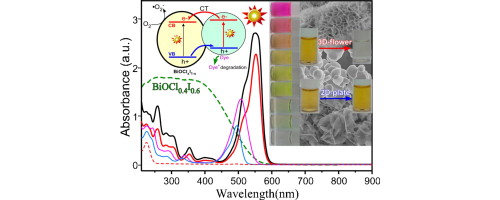
Adsorption and UV/Visible photocatalytic performance of BiOI for methyl orange, Rhodamine B and methylene blue: Ag and Ti-loading effects
Yohan Park; Yulyi Na; Debabrata Pradhan; Bong-Ki Min; Youngku Sohn
CrystEngComm 2014, 16, 3155-3167. DOI ↗ 📊 인용 ↗
📄 초록 (English) ▾
Adsorption and UV/visible photocatalytic activity of echinoid-like Ag and Ti-loaded BiOI were tested for methyl orange, Rhodamine B and methylene blue.
- 9
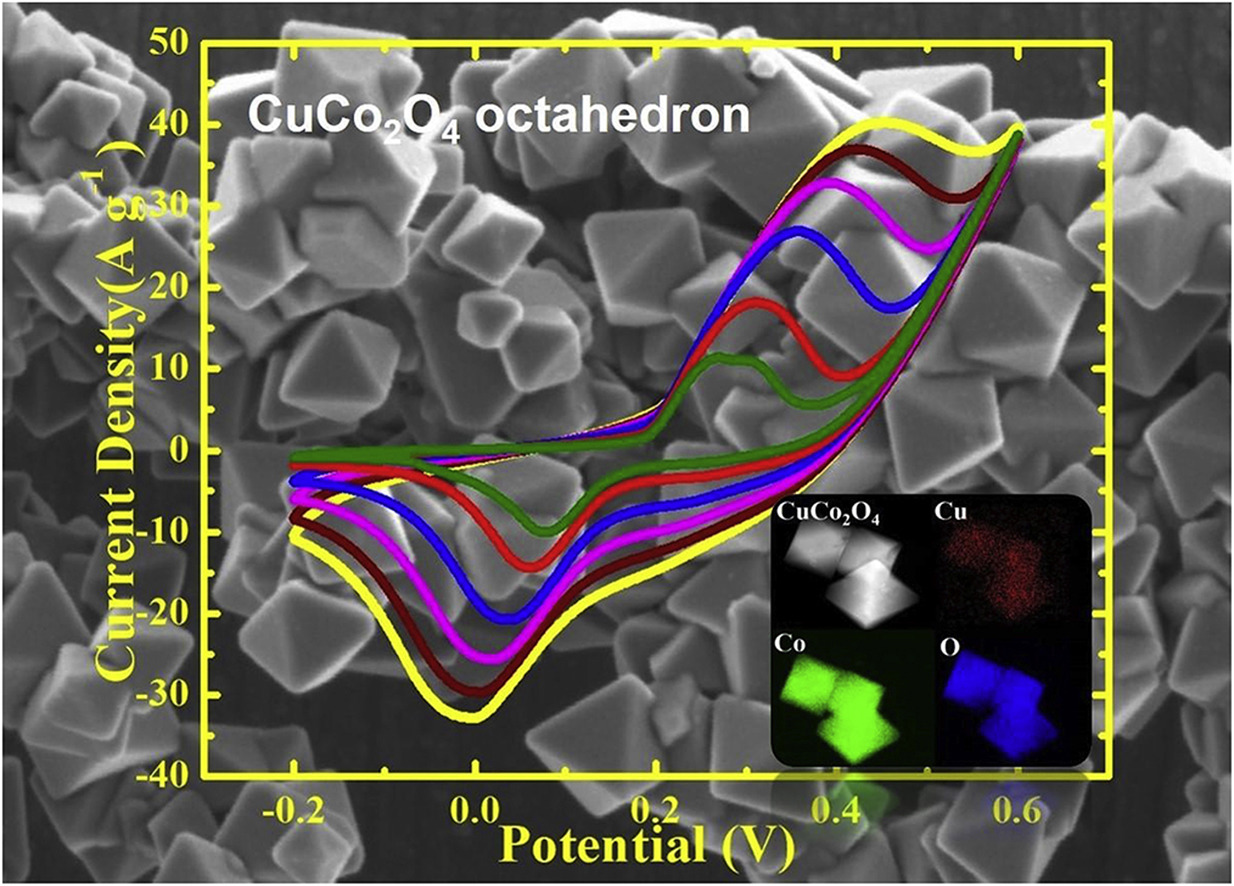
Facile synthesis of CuCo2O4 composite octahedrons for high performance supercapacitor application
Ashok Kumar Das; Nam Hoon Kim; Seung Hee Lee; Youngku Sohn; Joong Hee Lee
Composites Part B: Engineering 2018, 150, 269-276. DOI ↗ 📊 인용 ↗
📄 초록 (English) ▾
Shape tailoring of active materials could alter the performance of supercapacitors. Herein, we report the ethylenediaminetetraacetic acid (EDTA) assisted hydrothermal approach for the synthesis of single crystalline CuCo2O4 octahedrons and their application in a supercapacitor. Morphology and BET surface area analysis demonstrates the formation of CuCo2O4 octahedrons with a surface area of 61.97 m2 g−1. As an active material, the CuCo2O4 octahedrons exhibited a high specific capacity of 989 C g-1 at 5 mV s−1. In addition, a long-term cyclic stability with 87% of its initial specific capacity retention was achieved after 5000 cycles at 10 A g−1. This outstanding performance could be ascribed to its unique octahedron morphology. The electrochemical results demonstrate that CuCo2O4 with such a unique octahedron architecture could be a potential active material for the development of a high performance supercapacitor.
- 11
Green Synthesis of Anatase TiO2 Nanocrystals with Diverse Shapes and their Exposed Facets-Dependent Photoredox Activity
Nitish Roy; Yohan Park; Youngku Sohn; Kam Tong Leung; Debabrata Pradhan
ACS Applied Materials & Interfaces 2014, 6, 16498-16507. DOI ↗ 📊 인용 ↗
📄 초록 (English) ▾
The exposed facets of a crystal are known to be one of the key factors to its physical, chemical and electronic properties. Herein, we demonstrate the role of amines on the controlled synthesis of TiO2 nanocrystals (NCs) with diverse shapes and different exposed facets. The chemical, physical and electronic properties of the as-synthesized TiO2 NCs were evaluated and their photoredox activity was tested. It was found that the intrinsic photoredox activity of TiO2 NCs can be enhanced by controlling the chemical environment of the surface, i.e.; through morphology evolution. In particular, the rod shape TiO2 NCs with ∼25% of {101} and ∼75% of {100}/{010} exposed facets show 3.7 and 3.1 times higher photocatalytic activity than that of commercial Degussa P25 TiO2 toward the degradation of methyl orange and methylene blue, respectively. The higher activity of the rod shape TiO2 NCs is ascribed to the facetsphilic nature of the photogenerated carriers within the NCs. The photocatalytic activity of TiO2 NCs are found to be in the order of {101}+{100}/{010} (nanorods) > {101}+{001}+{100}/{010} (nanocuboids and nanocapsules) > {101} (nanoellipsoids) > {001} (nanosheets) providing the direct evidence of exposed facets-depended photocatalytic activity.
- 13
Antimicrobial activity of ZnO nanoplates and its Ag nanocomposites: Insight into an ROS-mediated antibacterial mechanism under UV light
Ara Joe; Se-Ho Park; Da-Jung Kim; Yeong-Ju Lee; Kwang-Hwan Jhee; Youngku Sohn; Eue-Soon Jang
Journal of Solid State Chemistry 2018, 267, 124-133. DOI ↗ 📊 인용 ↗
📄 초록 (English) ▾
We have previously shown that the bactericidal effect of ZnO nanoparticles in the absence of a light source originates from the released Zn2+ ions. The purpose of this study was to explore antibacterial activity arising from photo-induced reactive oxygen species (ROS) of ZnO nanoparticles under UV-A light irradiation. To achieve this, S. aureus and K. pneumoniae bacteria were exposed to three different ZnO nanoparticles under UV-A light. The concentrations of the ZnO nanoparticles were low, such that the antibacterial effect of the dissolved Zn2+ ions was negligible. From various empirical evidence, we found that the oxygen defects of the ZnO crystals enhanced the photogeneration of ROS and consequently, the ZnO nanoplates (NPs) with the polar facets exhibited the most pronounced antibacterial activity under UV-A stimulation. To enhance the antimicrobial activity of the NPs, we successfully synthesized silver-nanoparticle-decorated ZnO NPs and explored their antibacterial activity compared to that of the NPs.
- 14
Highly Active Tungsten Oxide Nanoplate Electrocatalysts for the Hydrogen Evolution Reaction in Acidic and Near Neutral Electrolytes
Arpan Kumar Nayak; Manju Verma; Youngku Sohn; Parag A. Deshpande; Debabrata Pradhan
ACS Omega 2017, 2, 7039-7047. DOI ↗ 📊 인용 ↗
📄 초록 (English) ▾
High Resolution Image Download MS PowerPoint Slide An efficient, cost-effective, and earth-abundant catalyst that could drive the production of hydrogen from water without or with little external energy is the ultimate goal toward hydrogen economy. Herein, nanoplates of tungsten oxide and its hydrates (WO 3 ·H 2 O) as promising electrocatalysts for the hydrogen evolution reaction (HER) are reported. The square-shaped and stacked WO 3 ·H 2 O nanoplates are synthesized at room temperature under air in ethanol only, making it as a promising green synthesis strategy. The repeated electrochemical cyclic voltammetry cycles modified the surface of WO 3 ·H 2 O nanoplates to WO 3 as confirmed by X-ray photoelectron and Auger spectroscopy, which leads to an improved HER activity. Hydrogen evolution is further achieved from distilled water (pH 5.67) producing 1 mA cm –2 at an overpotential of 15 mV versus the reversible hydrogen electrode. Moreover, WO 3 ·H 2 O and WO 3 nanoplates demonstrate excellent durability in acidic and neutral media, which is highly desirable for practical application. Improved hydrogen evolution by WO 3 (200) when compared to that by Pt(111) is further substantiated by the density functional theory calculations.
- 17
ZnO-TiO2 Core–Shell Nanowires: A Sustainable Photoanode for Enhanced Photoelectrochemical Water Splitting
Kyuwon Jeong; Prashant R. Deshmukh; Jinse Park; Youngku Sohn; Weon Gyu Shin
ACS Sustainable Chemistry & Engineering 2018, 6, 6518-6526. DOI ↗ 📊 인용 ↗
📄 초록 (English) ▾
We present the synthesis of a unique vertically aligned ZnO-TiO2 core–shell nanowires (NWs) heterostructure on an Si-wafer using a chemical vapor deposition method. The structural study shows the well-developed ZnO-TiO2 core–shell NWs heterostructure. This unique ZnO-TiO2 core–shell NWs heterostructure displays a photocurrent density of 1.23 mA cm–2, which is 2.41 times higher than pristine ZnO NWs. A cathodic shift in the flat band potential and a lower onset potential of a ZnO-TiO2 core–shell NWs heterostructure over ZnO NWs indicates more favorable properties for photoelectrochemical water splitting with a photoconversion efficiencey of 0.53%. A higher photocurrent density/photoconversion efficiency is due to the effective addition of photogenerated electron–hole separation originating from the ZnO NWs core and the conformal covering of a amorphous TiO2 passivation shell. Therefore, these results suggest that the vertically aligned one-dimentional ZnO-TiO2 core–shell NWs heterostructure is a promising photoanode for solar energy conversion devices.
- 19
Crystal Phase and Size-Controlled Synthesis of Tungsten Trioxide Hydrate Nanoplates at Room Temperature: Enhanced Cr(VI) Photoreduction and Methylene Blue Adsorption Properties
Arpan Kumar Nayak; Seungwon Lee; Young In Choi; Hee Jung Yoon; Youngku Sohn; Debabrata Pradhan
ACS Sustainable Chemistry & Engineering 2017, 5, 2741-2750. DOI ↗ 📊 인용 ↗
📄 초록 (English) ▾
Controlling the crystal phase of a material using solution-based method is a challenging task and has significant consequence to the material’s properties. Herein we report the phase and size-controlled synthesis of tungsten oxide hydrates at room temperature via a simple precipitation method. In the absence and presence of oxalic acid, orthorhombic WO 3 ·H 2 O and monoclinic WO 3 ·2H 2 O nanoplates of size in the range of 200–600 (thickness 95%) by adsorption on the nanoplates within a minute, suggesting the importance and potential of a material that can be synthesized at room temperature.
- 20
Facile Green Synthesis of WO3·H2O Nanoplates and WO3 Nanowires with Enhanced Photoelectrochemical Performance
Arpan Kumar Nayak; Youngku Sohn; Debabrata Pradhan
Crystal Growth & Design 2017, 17, 4949-4957. DOI ↗ 📊 인용 ↗
📄 초록 (English) ▾
The synthesis of nanostructured materials with controlled shape without using a capping agent and/or a hazardous chemical is one of the major existing challenges. Herein, we report a facile precipitation method to synthesize stacked orthorhombic tungsten trioxide hydrate (WO 3 ·H 2 O) nanoplates by simply mixing WCl 6 (0.025 M) in ethanol at room temperature for 1 h. On subsequent solvothermal treatment of WO 3 ·H 2 O nanoplates at 200 °C in ethanol, formation of monoclinic tungsten trioxide (WO 3 ) nanowires of <20 nm diameter is demonstrated. The morphology evolution of WO 3 nanowires from WO 3 ·H 2 O nanoplates and change in growth direction through dissolution and recrystallization process is further confirmed by varying the solvothermal duration and temperature. The as-synthesized WO 3 ·H 2 O nanoplates and WO 3 nanowires are used as photoanodes for the hydrogen generation through photoelectrochemical (PEC) water splitting in a neutral pH. The photocurrent density of WO 3 nanowires is found ∼21 times higher than that of WO 3 ·H 2 O nanoplates at 1.0 V vs saturated calomel electrode (SCE) and also higher than the reported WO 3 nanostructures. The superior PEC performance of WO 3 nanowires is justified on the basis of its (200) oriented one-dimensional morphology, large surface area, and small interfacial charge transfer resistance.
- 24
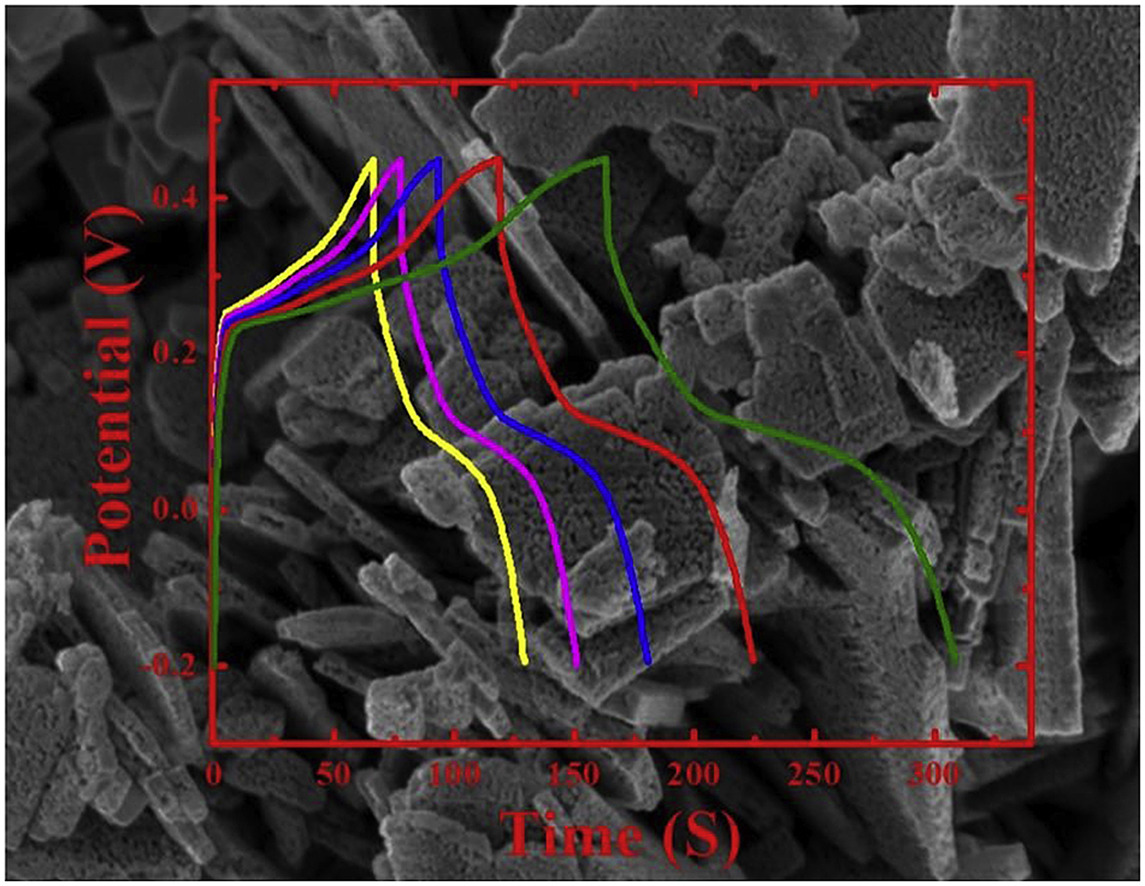
Facile synthesis of porous CuCo2O4 composite sheets and their supercapacitive performance
Ashok Kumar Das; Nam Hoon Kim; Seung Hee Lee; Youngku Sohn; Joong Hee Lee
Composites Part B: Engineering 2018, 150, 234-241. DOI ↗ 📊 인용 ↗
📄 초록 (English) ▾
The synthesis of metal oxide composites with porous structures for supercapacitor application has drawn much attention owing to their high surface area and easy access of the electrolyte ions to the electrode surface through the pores of the active materials. A facile hydrothermal approach is suggested for the synthesis of porous CuCo2O4 composite sheets and their application as an active electrode material for supercapacitor application. Field emission scanning electron microscopy (FESEM) and transmission electron microscopy (TEM) measurements show the formation of porous CuCo2O4 composite sheets. BET surface area measurements show that the porous CuCo2O4 composite sheet has 69.44 m2 g−1 surface area, which is 4.7 times higher than quasi-spherical CuCo2O4 nanoparticles. The porous CuCo2O4 composite sheet delivered 1037 C g−1 specific capacity at 5 mV s−1. Additionally, the porous CuCo2O4 composite sheet retained 94% of its initial specific capacity after 5000 charge-discharge cycles at 10 A g−1 indicating an excellent cyclic stability. This excellent supercapacitive performance is attributed to the high surface area and enhanced ion transport through the pores of the CuCo2O4 sheets. This high specific capacity and excellent cyclic stability of the porous CuCo2O4 composite sheets prove to be a promising candidate for supercapacitor application.
- 26
Synthesis of In2S3 microspheres using a template-free and surfactant-less hydrothermal process and their visible light photocatalysis
Arpan Kumar Nayak; Seungwon Lee; Youngku Sohn; Debabrata Pradhan
CrystEngComm 2014, 16, 8064. DOI ↗ 📊 인용 ↗
📄 초록 (English) ▾
Indium sulfide (In2S3) microspheres of (β-) tetragonal phase were synthesized by varying the indium precursors using a template-free and surfactant-less hydrothermal process at 150 °C. The as-synthesized samples were found to be crystalline and phase pure as confirmed by X-ray diffraction and X-ray photoelectron spectroscopy studies, respectively. Indium precursors play an important role in controlling the shape of the building blocks, i.e. nanoflakes or nanobricks, of In2S3 microspheres. The photocatalytic activity of as-synthesized In2S3 microspheres was tested for the degradation of methylene blue and crystal violet in the presence of visible light produced by an incandescent lamp. The terephthalic acid test using photoluminescence spectroscopy shows hydroxyl radicals as active species for the degradation of organic contaminants. Repeat photocatalysis measurements suggest the high stability of In2S3 microspheres without a change in their morphology and phase.
- 29
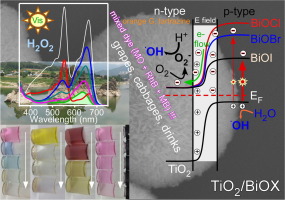
TiO2/BiOX (X=Cl, Br, I) hybrid microspheres for artificial waste water and real sample treatment under visible light irradiation
Young In Choi; Kyung Hee Jeon; Hye Sun Kim; Jun Hyok Lee; Seong Jun Park; Jang Eon Roh; Mohammad Mansoob Khan; Youngku Sohn
- 30
Interfacial Natures and Controlling Morphology of Co Oxide Nanocrystal Structures by Adding Spectator Ni Ions
Jin-Seog Gwag; Young-Ku Sohn
Bull. Korean Chem. Soc. 2012, 33, 505-510. DOI ↗ 📊 인용 ↗
📄 초록 (English) ▾
Cobalt oxide nanostructure materials have been prepared by adding several concentrations of spectator Ni ions in solution, and analyzed by electron microscopy, X-day diffraction, calorimetry/thermogravimetric analysis, UV-vis absorption, Raman, and X-ray photoelectron spectroscopy. The electron microscopy results show that the morphology of the nanostructures is dramatically altered by changing the concentration of spectator ions. The bulk XRD patterns of $350^{\circ}C$ -annealed samples indicate that the structure of the cobalt oxide is all of cubic Fd-3m $Co_3O_4$ , and show that the major XRD peaks shift slightly with the concentration of Ni ions. In Raman spectroscopy, we can confirm the XRD data through a more obvious change in peak position, broadness, and intensity. For the un-sputtered samples in the XPS measurement process, the XPS peaks of Co 2p and O 1s for the samples prepared without Ni ions exhibit higher binding energies than those for the sample prepared with Ni ions. Upon $Ar^+$ ion sputtering, we found $Co_3O_4$ reduces to CoO, on the basis of XPS data. Our study could be further applied to controlling morphology and surface oxidation state.