Department of Chemistry · Chungnam National University
Energy Environment
Solution Laboratory
We design electrochemical routes that turn CO2, water, and nitrogen into fuels and value-added chemicals — pioneering EC Fischer–Tropsch chemistry for a carbon-neutral future.
Electrochemistry · Catalysis · Physical Chemistry · Spectroscopy · Nanochemistry
Research
Controlling molecular transformation at electrified interfaces
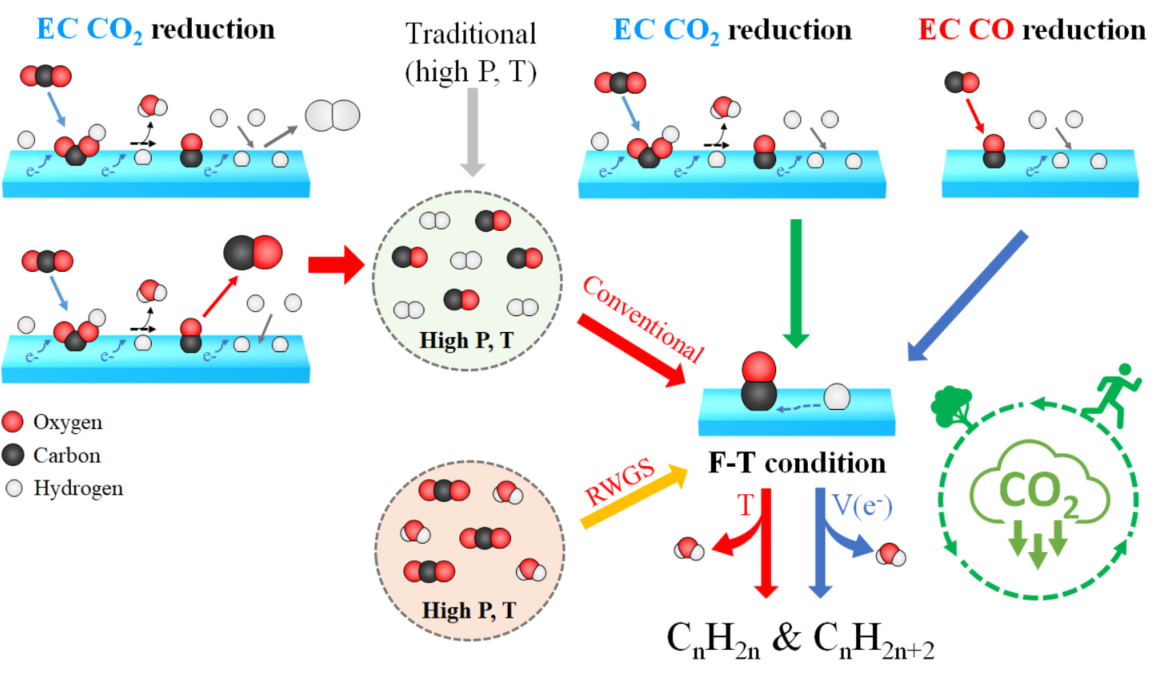
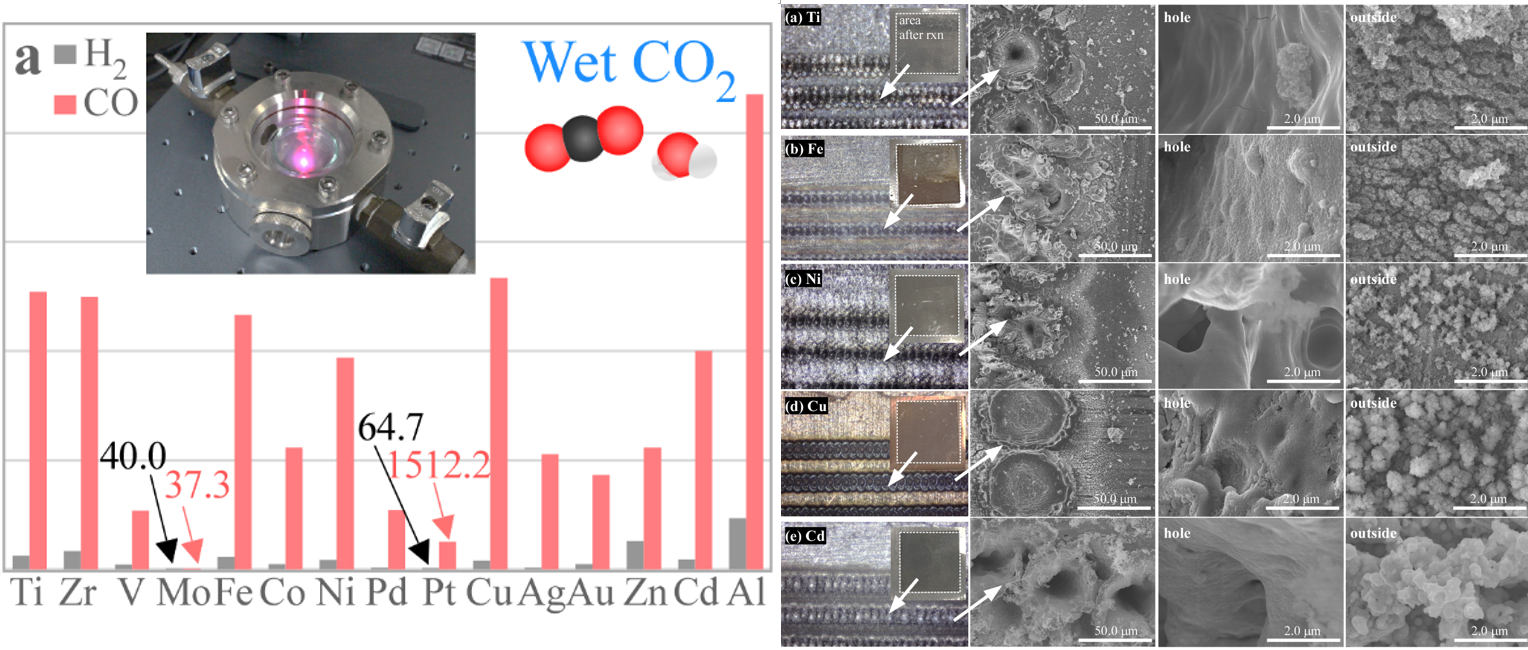
EC Fischer–Tropsch
Electrochemically driving C–C coupling to convert CO2/CO into long-chain fuels and chemicals.
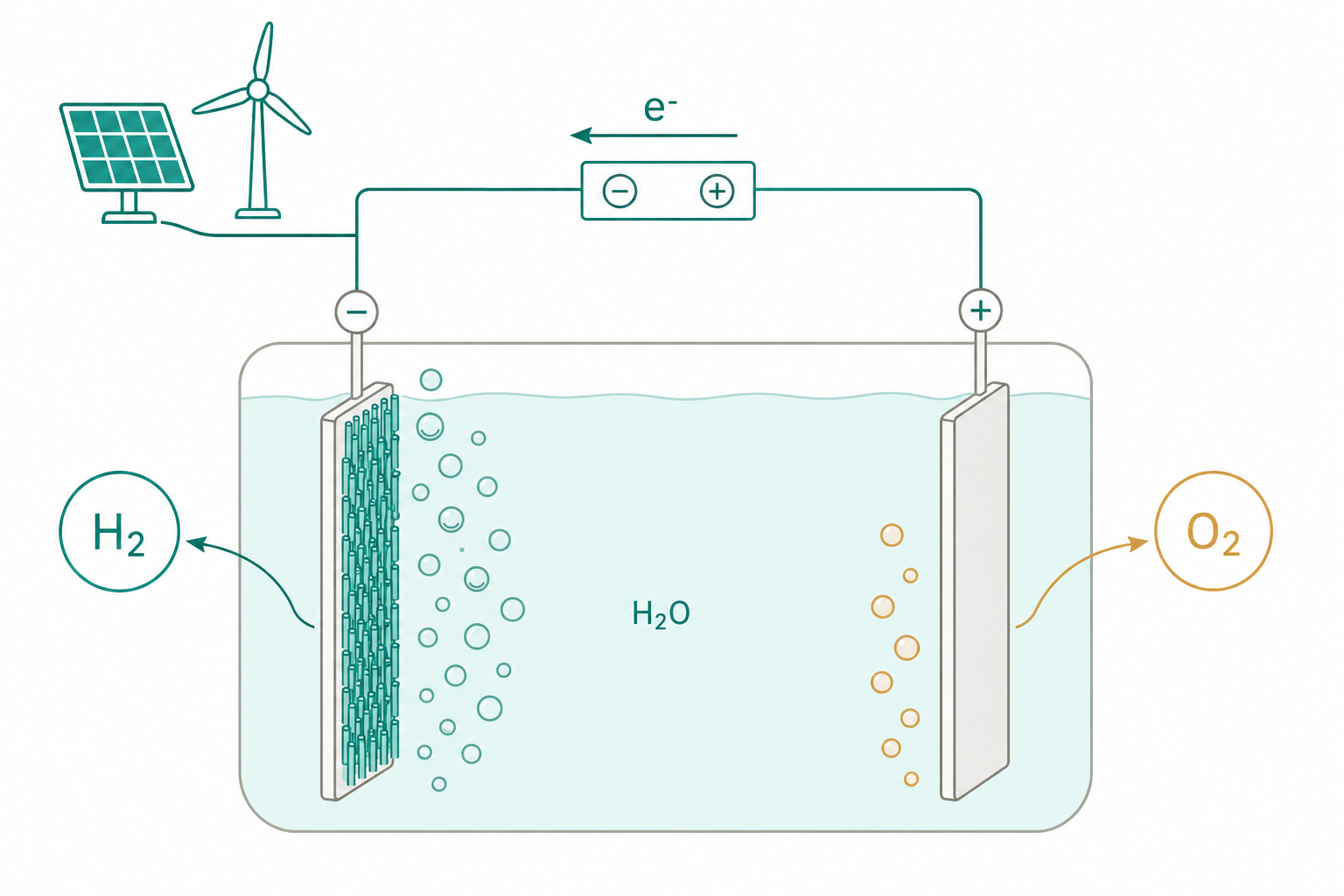
Green Hydrogen
Clean H2 production via electrochemical water splitting with earth-abundant electrocatalysts.
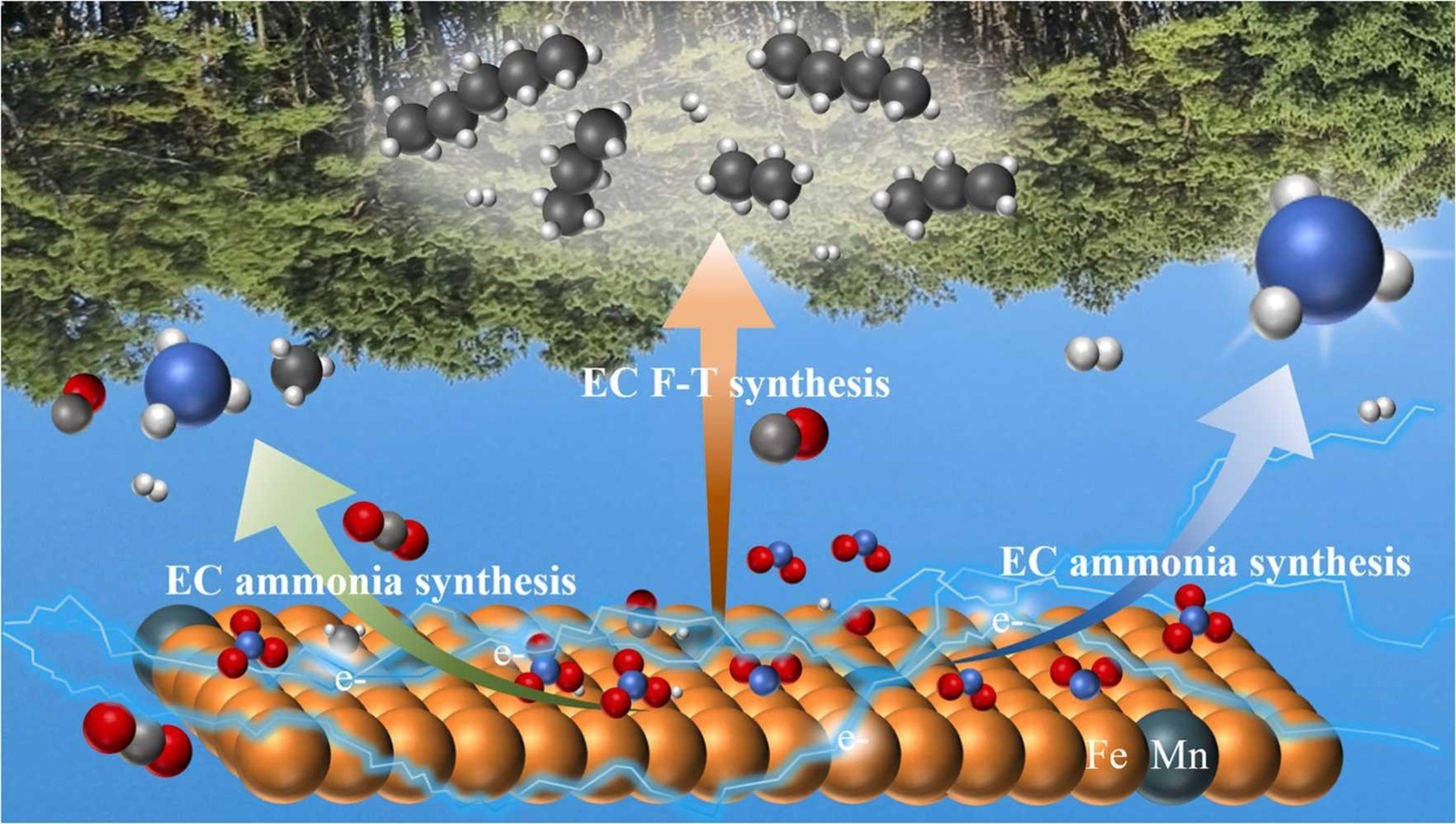
Electrochemical NH3 Synthesis
Transforming NOx, nitrite, and nitrate into valuable ammonia through electrochemical pathways.
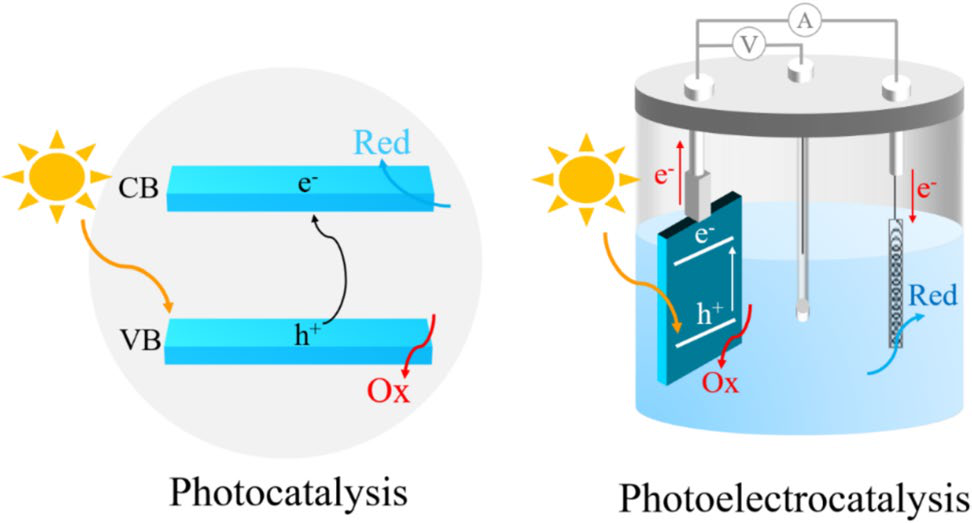
Photon & Plasma-to-X
Solar, thermal, and plasma-driven chemical conversion complementing electrochemistry.
Publications
Selected & recent papers
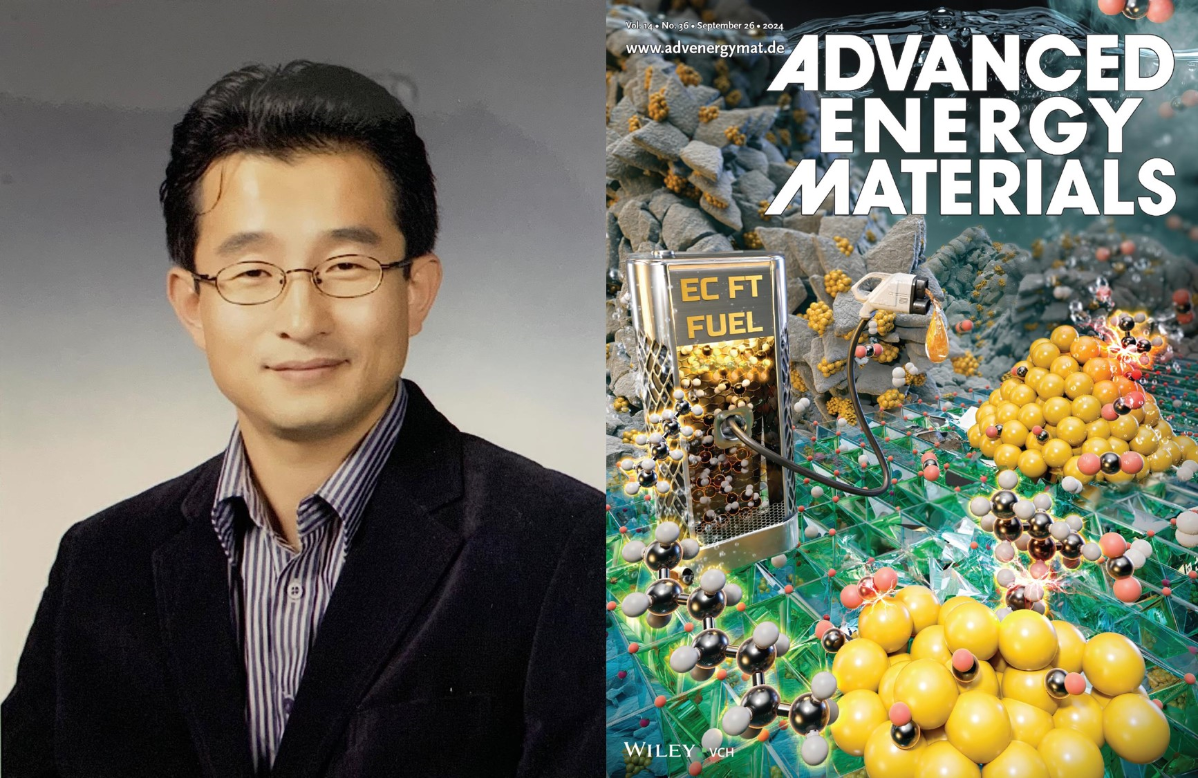
Journal Cover Article
Exploring Direct Electrochemical Fischer–Tropsch Chemistry of C1–C7 Hydrocarbons via Perimeter Engineering of Au–SrTiO3 Catalyst
Advanced Energy Materials · 2024 Link ↗
-
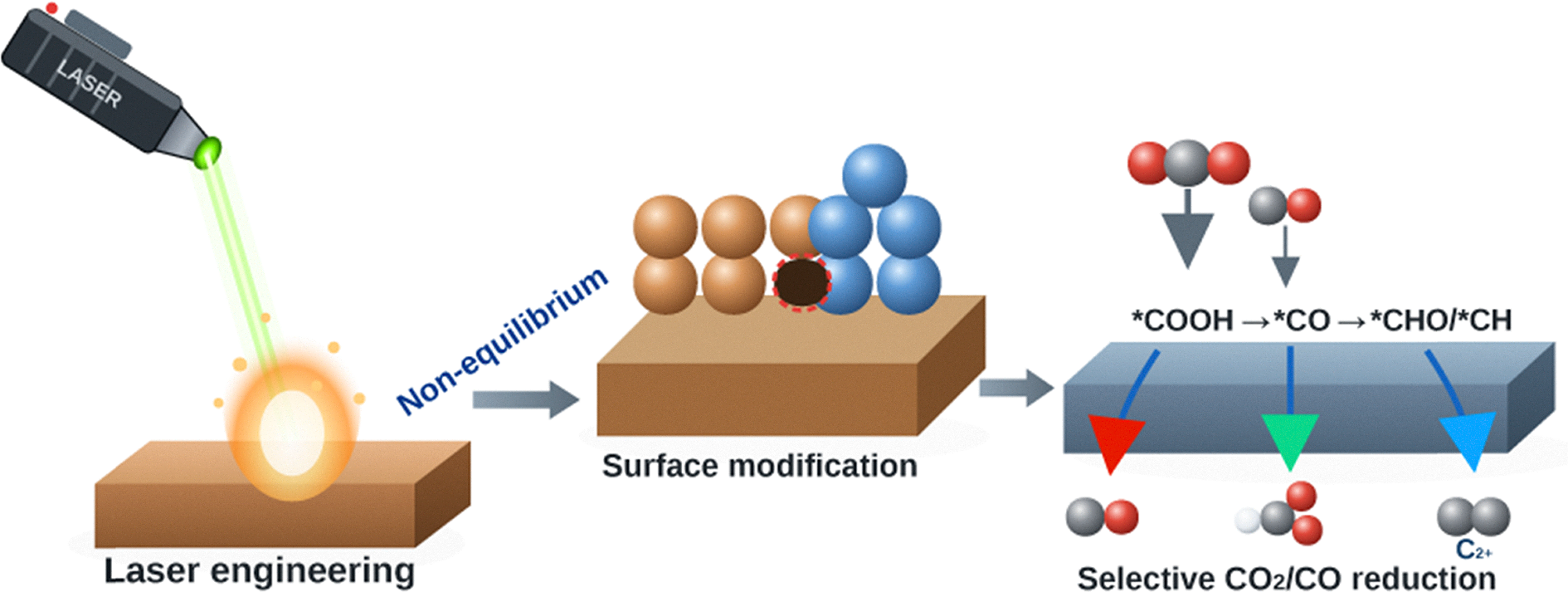
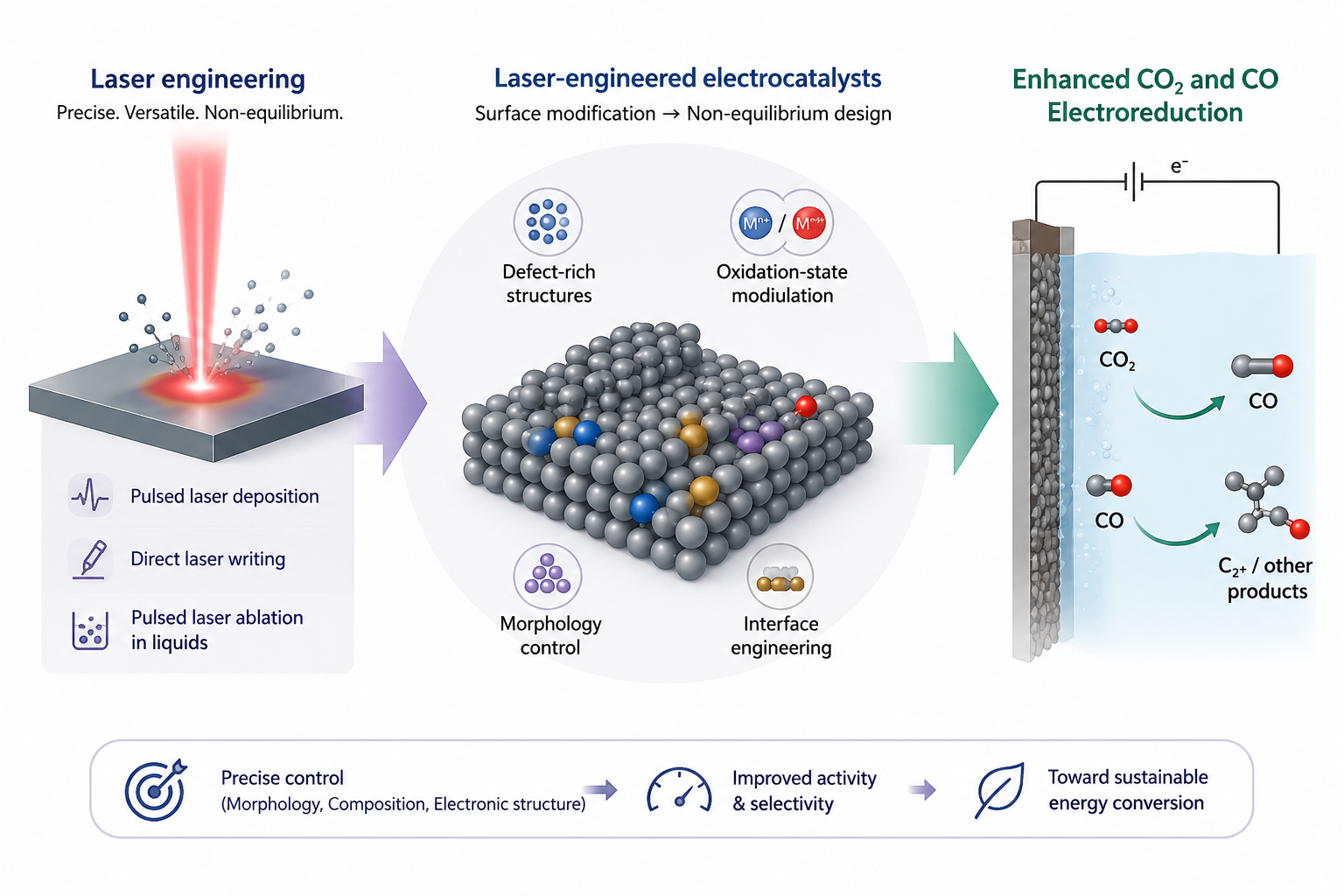
Laser-engineered electrocatalysts for CO2 and CO reduction: From surface modification to non-equilibrium catalyst design
Mater. Horiz. 2026. DOI ↗ 📊 인용 ↗
📄 Abstract ▾
Laser processing has emerged as a powerful platform for engineering electrocatalyst surfaces and interfaces with exceptional spatial and temporal precision. Unlike conventional synthesis routes that largely access equilibrium structures, laser irradiation can generate non-equilibrium phases, defect-rich microstructures, and dynamically engineered interfaces through localized energy delivery and ultrafast quenching. These unique capabilities offer new opportunities for tailoring catalytic activity and selectivity in electrochemical CO2 and CO reduction. This review summarizes recent advances in laser-engineered electrocatalysts, with emphasis on the fundamental principles of laser–matter interactions and fabrication strategies including pulsed laser deposition, direct laser writing, and pulsed laser ablation in liquids. We discuss how laser parameters govern surface restructuring, oxidation-state modulation, defect formation, and interfacial engineering, enabling the creation of structured electrodes, oxide–metal interfaces, and surfactant-free nanomaterials. Representative catalyst systems are highlighted to illustrate the impact of laser-induced modifications on catalytic performance and reaction pathways. Although the application of laser processing in CO2 and CO electrocatalysis remains relatively underexplored, its ability to simultaneously control morphology, composition, and electronic structure positions it as a promising platform for next-generation catalyst design. Finally, current challenges and future opportunities are discussed, including mechanistic understanding, operando characterization, parameter standardization, and scalable manufacturing. We anticipate that laser processing will evolve beyond a surface-modification tool toward a versatile platform for non-equilibrium electrocatalyst design and sustainable energy-conversion technologies.
-
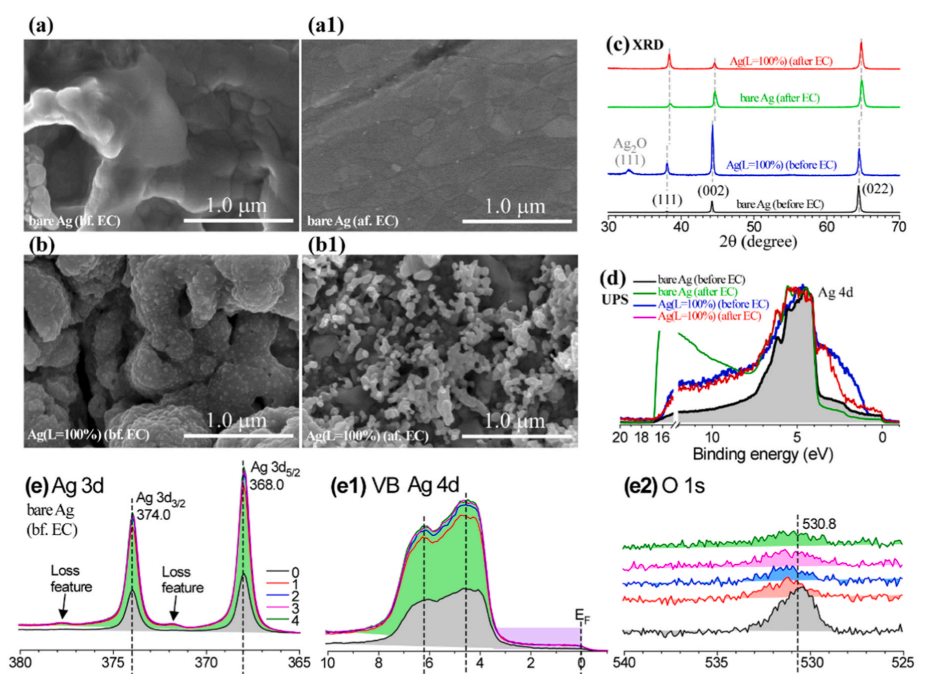
Laser-engineered Ag/Ag oxide interfaces for tunable CO2 reduction: Mechanistic insights from experiment and theory
Mater. Today Energy 2026. DOI ↗ 📊 인용 ↗
📄 Abstract ▾
Interface engineering of silver (Ag) electrodes provides an effective strategy to tune activity and selectivity in electrochemical CO2 reduction (CO2RR). Here, Ag and Ag oxide (Ag/AgxO) electrodes were prepared via controlled infrared (1064 nm) laser treatment and evaluated in KHCO3 and phosphate electrolytes. Laser-induced surface restructuring modified oxidation states, crystallographic orientations, and interfacial electronic properties, leading to electrolyte- and potential-dependent shifts in product distribution. In KHCO3 electrolyte, CO remained the dominant product, whereas phosphate electrolyte significantly enhanced CO selectivity with increasing laser treatment. Oxidized Ag surfaces suppressed hydrogen, formate, and C2+ hydrocarbons. Product selectivity showed clear potential dependence: CO and C2+ hydrocarbons peaked at moderate potentials, while formate formation increased at more negative potentials. Long-chain C2+ hydrocarbons followed a Fischer-Tropsch-like growth trend. Electrochemical impedance spectroscopy revealed changes in charge-transfer kinetics and interfacial capacitance. Density functional theory calculations indicate that CO formation via COOH intermediates is favored on Ag(111) and Ag2O(111), whereas formate formation via HCOO* is more favorable on metallic Ag. These results clarify how Ag/Ag oxide interfaces regulate CO2RR pathways.
News
From the lab
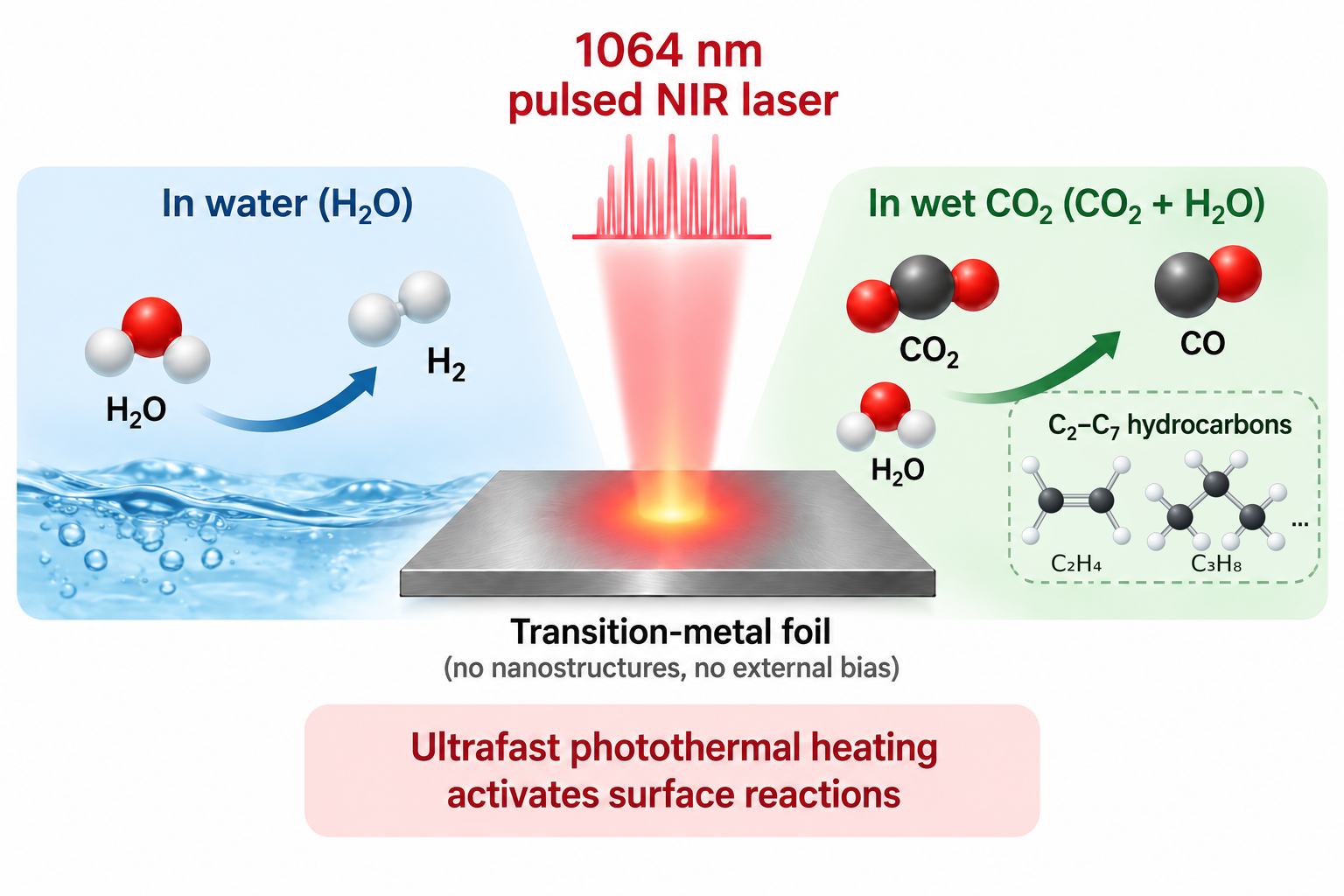
- 2026-09-14 Sohn and Yoon Groups Convert Water and CO₂ Using Only a Pulsed Laser Published in Advanced Functional Materials - No nanostructures, no semiconductor absorber — the reaction runs on plain transition …
- 2026-08-24 Graduate Student So Young Kim Publishes in Materials Horizons An international collaborative research project by graduate student So Young Kim has been published in Materials Horizons (IF=11.4…
- 2026-07-27 Invited Seminar Notice: Prof. Weixin Huang, University of Science and Technology of China [Invited Seminar Announcement] Prof. Weixin Huang, University of Science and Technology of China We are pleased to invite Prof. We…